You’ve probably seen those three or four-wheeled little scooters zipping around—someone with one leg up, rolling along like a pro. They’re called knee scooters, and some of them are foldable too, which sounds super convenient. But when it comes to older adults, a lot of folks start asking, “Are these things actually safe?”
Fair question. Let’s break it down and talk about what really matters when it comes to using a foldable knee scooter as an older adult.
What’s the deal with “foldable”?
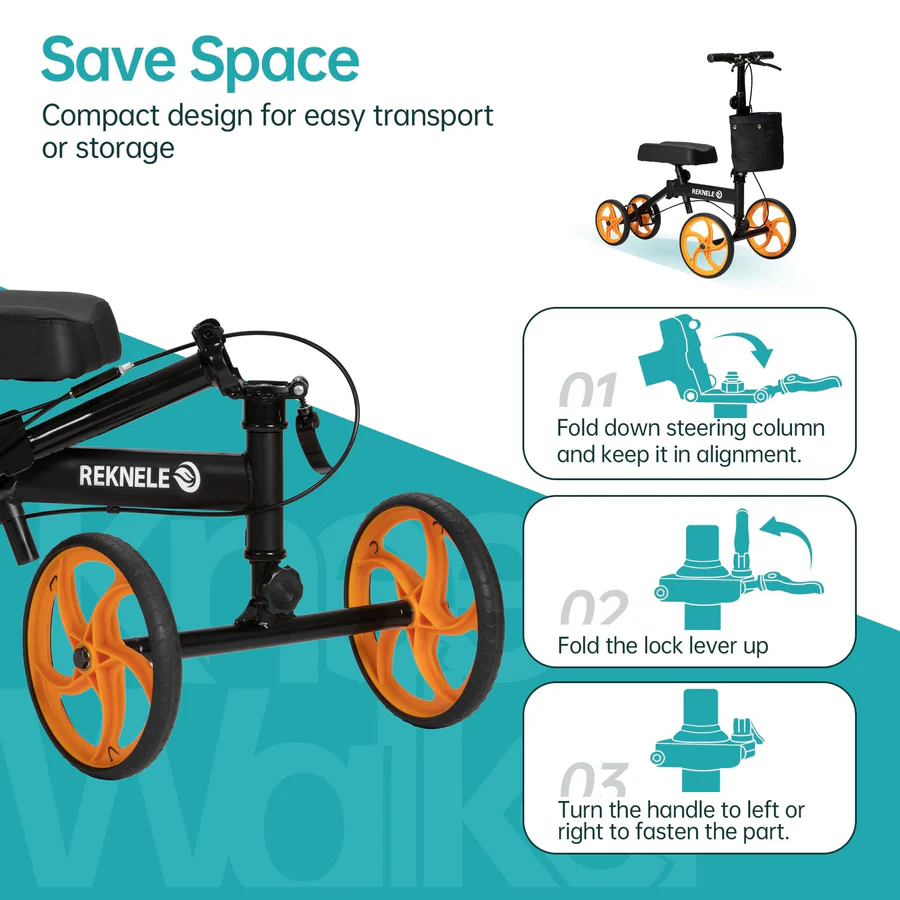
A foldable knee scooter is just like a regular knee scooter but with one key feature—it folds up. That makes it easier to pop in the trunk of a car, store in a closet, or carry into the doctor’s office. Sounds simple enough, right? But the ability to fold also brings up safety questions: Is it sturdy enough? Will it stay locked in place? We’ll get to that.
Stability is everything
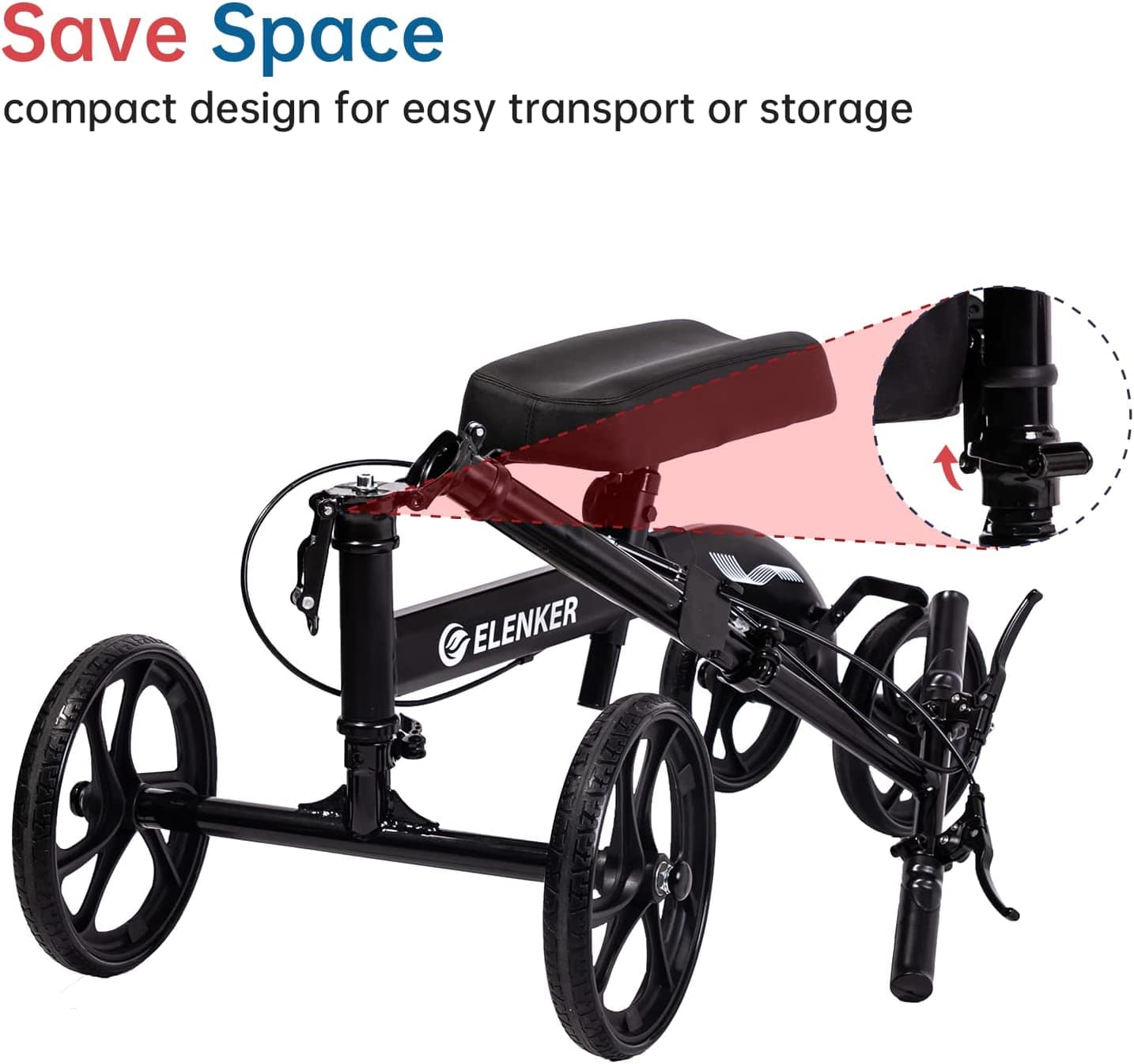
If you’re a senior or helping shop for one, stability is priority number one. And the good news is, most foldable knee scooters these days are built with that in mind. The frames are strong, the wheels are wide enough for solid balance, and many models come with dual hand brakes, just like a rollator walker.
But here’s the thing—foldable or not, knee scooters aren’t for everyone. If someone has poor balance, trouble with coordination, or weakness in both legs, then using a knee scooter might feel like trying to ride a unicycle on a bumpy road. That’s when a traditional walker or rollator might be the safer choice.
Indoor vs. outdoor use
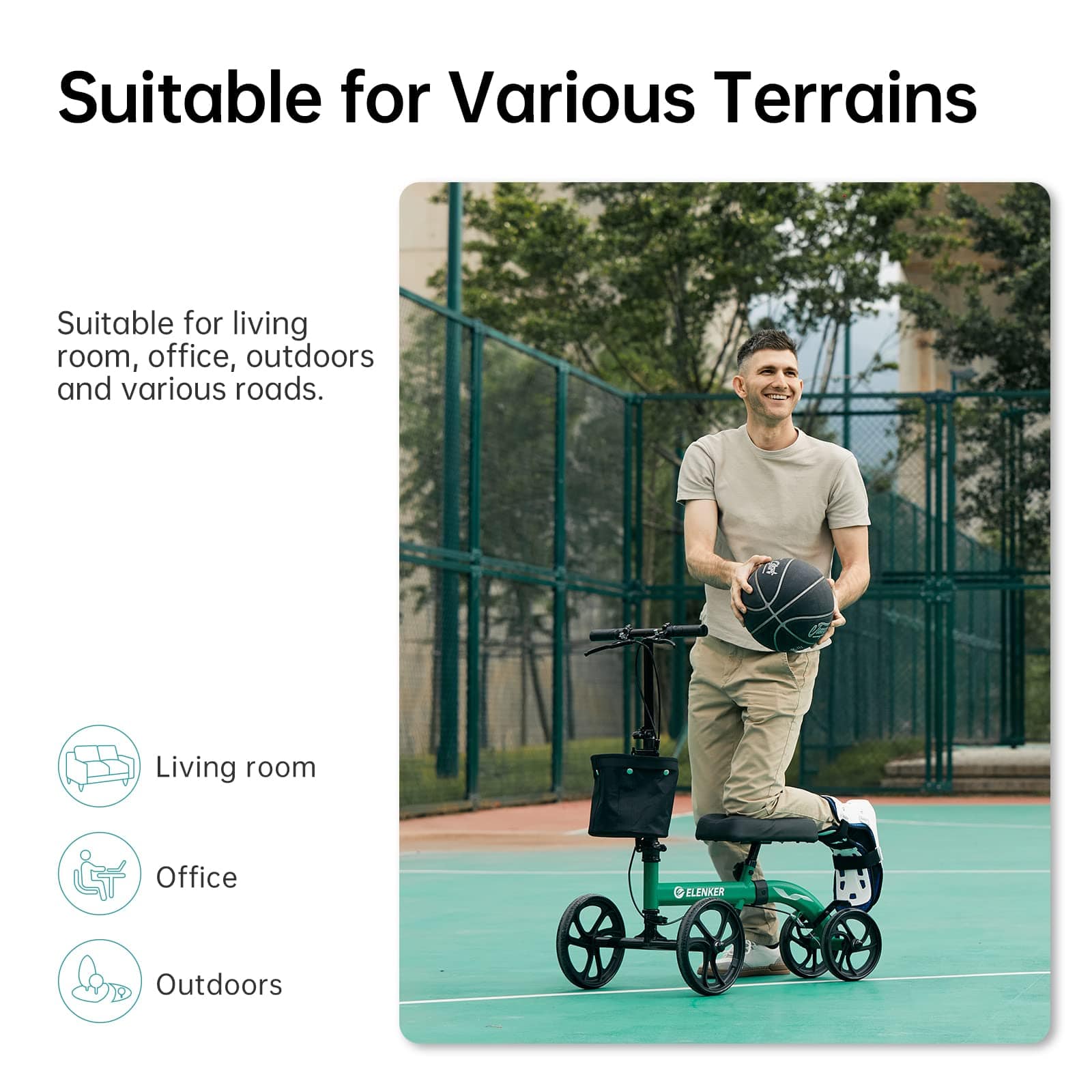
Another thing to consider is where the scooter will be used. Inside the house on smooth floors? Probably fine. Scooting over plush carpet or tight spaces? A little trickier, but doable with practice. Outdoors on cracked sidewalks or gravel paths? That’s where you want to be careful.
Some foldable models have all-terrain wheels, which help with uneven ground, but even then—it’s not a mountain bike. If the user isn’t confident outside, they’re better off sticking to indoor use or smooth pavement only.
Learning curve: yes, there is one
Using a knee scooter for the first time feels a bit odd, especially for seniors who’ve never used one before. It’s not just “hop on and go.” You’ve got to get the balance right, use the brakes properly, and steer carefully—especially around corners or furniture.
The first couple of days might involve a few awkward moments and near misses. But with a little practice (and maybe a patient caregiver nearby), it usually becomes second nature.
Tip: Try it out on carpet first—it’s more forgiving if there’s a stumble.
Foldable doesn’t mean flimsy
Some people worry that because a scooter folds, it must be wobbly or weak. That’s not really the case. Quality foldable knee scooters are made with solid materials like aluminum or reinforced steel. When properly locked into place, they’re just as stable as the non-folding kind.
The trick is making sure it is locked. Don’t just assume—it’s worth double-checking the hinges and joints every time it’s unfolded. Most scooters have a safety latch or pin that clicks when it’s ready. It takes two seconds and can save a fall.
Brakes are your best friend
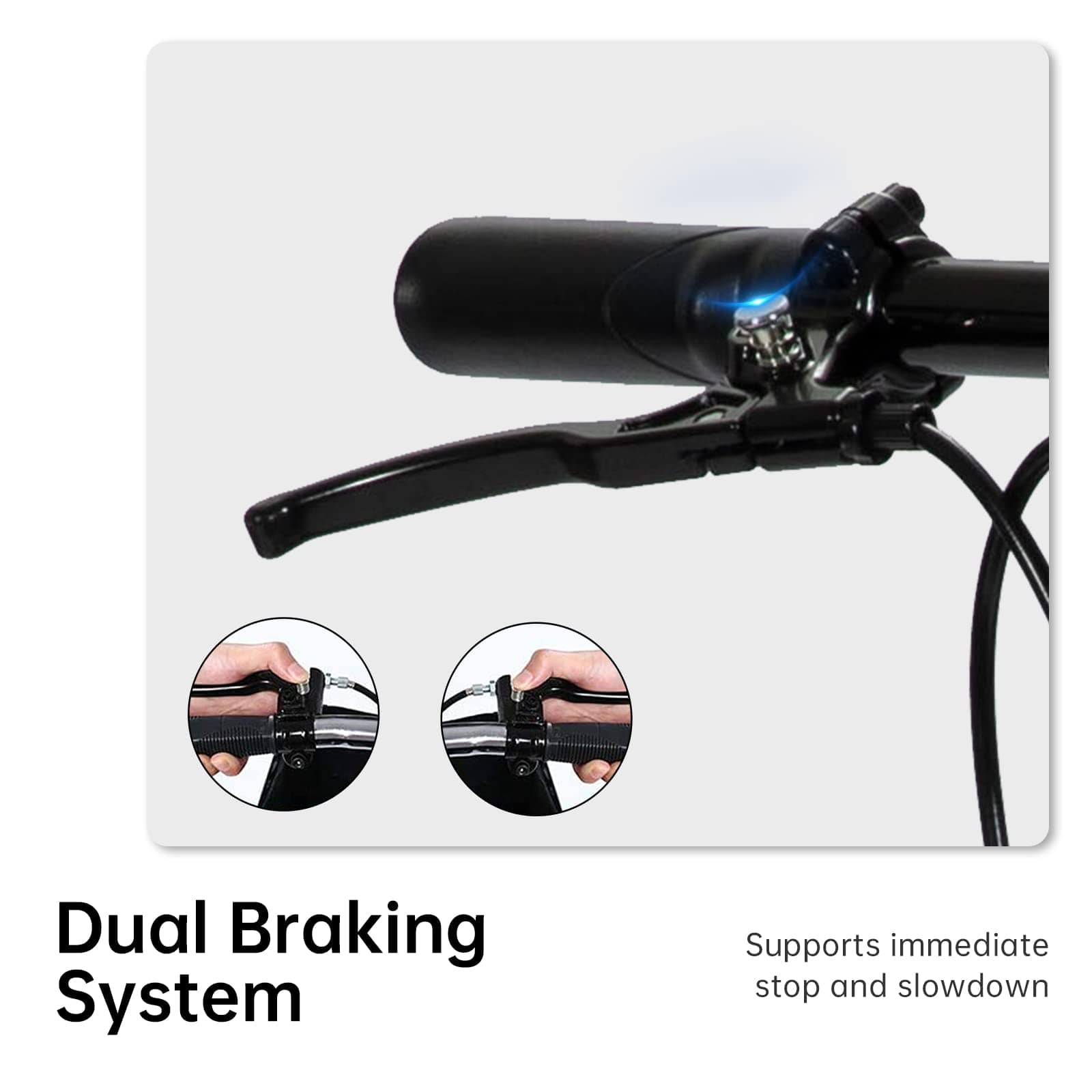
If the scooter doesn’t have good brakes, skip it. Period. Knee walkers for elderly users especially, being able to stop instantly (and stay stopped on a slope) is crucial. Many models have hand brakes just like a bicycle, and some even come with a parking brake so you can rest without it rolling away.
Before using the scooter regularly, give those brakes a real test. Try them on a ramp, on tile, and even while turning. Better safe than sorry.
Comfort matters more than you think
Older adults often have other conditions going on—arthritis, back pain, limited flexibility. So comfort isn’t just a “nice to have”—it can be the difference between using the scooter or ditching it.
Look for a foldable scooter with a well-padded knee rest that adjusts in height. If it’s too low or too hard, it puts a lot of pressure on joints and throws off posture, which can lead to new aches and pains. Some folks even add a little memory foam cushion on top. No shame in that.
Watch for fatigue and overuse
Here’s something people don’t always think about: knee scooters use different muscles than walking. Your “good leg” does all the pushing, and your arms are steering, braking, and balancing you. For seniors who aren’t super active, that can lead to fatigue pretty quickly.
Short trips are fine. But if someone’s using it all day long—shopping, cooking, running errands—it might start wearing them out. Rest breaks are your friend.
When it works—it works great
For seniors with a foot or ankle injury, post-surgery recovery, or arthritis flare-ups, a foldable knee scooter can be a real help. It gives them mobility without crutches, it’s easier on the hands, and it lets them stay active while healing.
The key is choosing the right model, setting it up correctly, and taking a bit of time to get used to it.
Are foldable knee scooters safe for elderly users? In many cases, yes—with the right setup and a bit of caution. They’re not for everyone, and they’re definitely not foolproof. But with proper fit, stable design, and careful use, they can be a solid solution.
Just remember: safety checks, a comfortable setup, and practice make all the difference.